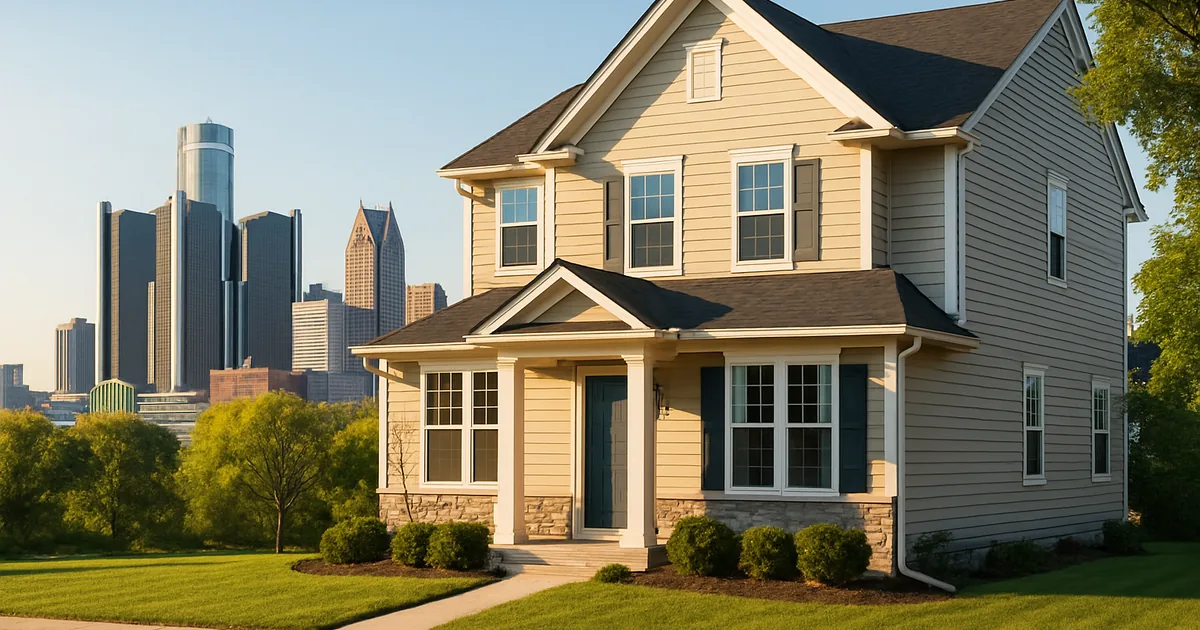
Rates have been stubborn. Sellers in Southeast Michigan know it. And right now, more of them are willing to do something about it by offering concessions at the closing table.
One of the smartest ways to use those concessions is a temporary buydown. Not a permanent rate reduction, not a price cut. A structured, lender-approved tool that lowers your monthly payment for the first one, two, or three years of your loan while the market finds its footing.
If your agent is not talking to you about this on every offer you write, ask them why.
What is a temporary buydown?
A temporary buydown is a prepaid interest arrangement funded at closing, usually by the seller or sometimes by the lender, that reduces your effective interest rate for a defined period. The money goes into a custodial account and is drawn down each month to cover the difference between your actual rate and the reduced rate you pay.
The most common structures you will see today:
- 3/2/1 buydown: rate drops 3% below your locked rate in year one, 2% in year two, 1% in year three, then you pay the full rate from year four on.
- 2/1 buydown: rate drops 2% in year one, 1% in year two, full rate from year three.
- 1/0 buydown: rate drops 1% in year one only, full rate from year two.
The seller (or lender) funds the buydown at closing. You do not pay extra. You just pay less every month for however long the buydown lasts.
A real number example
Say you are buying a $425,000 home in Macomb County with 10% down. Your loan is $382,500. On a 30-year conventional loan, the difference between your year-one buydown rate and your full rate is real money every single month.
On a 2/1 buydown, your first-year monthly savings could easily run $400 to $600 depending on where rates sit. That is $5,000 to $7,000 in payment relief while you get settled, build reserves, and wait for the refi window to open if rates drop.
The math only works if the seller is funding it. Most buyers use seller concessions to cover the buydown cost. In a market where sellers are sitting longer, that conversation is happening more often than you think.
Who qualifies?
Temporary buydowns are available on conventional loans, FHA loans, and VA loans. You still qualify at the note rate, not the buydown rate. That is a hard underwriting rule. So the buydown does not make you qualify for more home. It just makes the first few years more manageable on a home you already qualify for at the full payment.
Conforming loan limits apply. If you are buying a standard single-family home in Oakland or Macomb County with a conventional loan, you are almost certainly in range.
Why this matters right now in Michigan
For homeowners in Southeast Michigan, the decision to sell often comes down to payment shock on the next home. If you are sitting on a 3% rate and the new home means a 7% rate, you feel that every month. A buydown does not eliminate that shock, but it softens it in the early years and gives you a built-in bridge to a potential refinance.
For home buyers, it is leverage. When you write an offer and ask for seller concessions to fund a buydown, you are not just asking for money off the price. You are asking for something the seller can give you without reducing their net in the same way a price cut does. It is an easier conversation at the listing table, which means agents who know how to structure it are writing more accepted offers.
For real estate agents in Michigan, this is a tool you need in every offer conversation right now. Buyers who understand how a 2/1 buydown works are more likely to write. Sellers who understand they can fund one without matching a low offer are more likely to counter productively. Knowing the mechanics makes you better at both.
The refinance angle
Here is what I hear from buyers all the time: "I'll just wait for rates to drop and then buy." The problem with that plan is that when rates drop, every buyer who was waiting comes off the sideline at once. Inventory tightens, offers get competitive again, and the price you could have bought at last year is gone.
A buydown lets you get into the home now at a payment you can handle, with the full rate kicking in when your income has likely grown and rates may have moved in your favor. If rates do drop enough to refinance, you get to refinance. The buydown funds left in escrow come back to you as a principal reduction at close of the refi. You do not lose that money.
It is not a perfect hedge. But it is a real one.
How to ask for it
You do not need a special program or a specific lender to do a temporary buydown. What you need is an offer that requests seller concessions in an amount that covers the buydown cost, and a loan officer who can run the math before you write.
The cost of a 2/1 buydown on a $382,500 loan is roughly 2 to 3 percent of the loan amount depending on the rate, held in escrow and drawn monthly. Your agent and I can structure that into your offer before you go to the table so there are no surprises on either side.
If you want to see what your payment looks like in year one versus year three versus the full rate, that is a five-minute conversation. Text me the address and the purchase price and I will run it.
Why this matters
A temporary buydown is not a gimmick. It is a cash-flow tool that has been in the mortgage industry for decades and just became relevant again because of where rates are.
Homeowners considering a move have a real option to soften the payment gap between their current rate and the market rate on the next home, without waiting for a refinance they cannot predict.
Home buyers who are stretching to get into the right neighborhood at the right school district now have a structurally lower payment for the years when cash is tightest, right after you close.
Home sellers who are not moving because of payment fear on the next purchase should know that a buydown on the buy side is a concrete solution, not a vague "wait and see."
Real estate agents who want to write more accepted offers in a market where sellers are offering concessions need to know how to ask for and structure a buydown as part of the offer, not as an afterthought.
Talk to Tommy before your next offer. Run the numbers first. The buydown may be the move that gets your offer written and your client moving.
Frequently asked questions
Frequently asked questions
What is a 2/1 buydown on a mortgage?
A 2/1 buydown is a temporary interest rate reduction funded at closing, typically by the seller using concessions. Your effective rate drops 2 percentage points in year one and 1 percentage point in year two, then returns to your full locked rate from year three onward. The difference is covered by funds held in a custodial escrow account.
Does a temporary buydown affect how much I can borrow?
No. Lenders qualify you at the full note rate, not the reduced buydown rate. The buydown lowers your actual payment in the early years but does not change your maximum loan amount. You must be able to afford the full payment at the locked rate.
Who pays for a temporary buydown?
Usually the seller, using concessions negotiated as part of your offer. In some cases the lender may contribute, depending on the loan program. The buyer rarely pays for it out of pocket. The cost is held in escrow and drawn down monthly to cover the payment difference.
What happens to the buydown funds if I refinance?
If you refinance before the buydown period ends, any remaining funds in the escrow account are applied as a principal reduction on your new loan. You do not forfeit the money. This is one reason a buydown plus a later refinance can be a smart combined strategy.
Are temporary buydowns available on FHA and VA loans in Michigan?
Yes. Temporary buydowns are available on conventional, FHA, and VA loan programs. The specific buydown structures available may vary by loan type and lender. A 2/1 buydown is one of the most commonly used across all three program types right now.
Want to talk through your situation?
Reach out to Tommy directly. No pressure, no pitch. Just clarity.
Work with Tommy